What Is Cloud Computing? A Complete 2025 Guide
Cloud computing has transformed how businesses and developers build, deploy, and scale applications. This guide breaks down the fundamentals so you can make informed infrastructure decisions.
James Whitfield
Cloud Infrastructure Engineer · LightYear Cloud
Cloud computing refers to the delivery of computing services — including servers, storage, databases, networking, software, and analytics — over the internet. Instead of owning and maintaining physical hardware, you rent access to resources from a cloud provider and pay only for what you use.
This model has fundamentally changed how organisations approach IT. What once required months of procurement and capital expenditure can now be provisioned in minutes. Whether you are a solo developer spinning up a side project or an enterprise scaling a global platform, cloud computing offers the same underlying infrastructure on demand.
The Three Service Models
Cloud services are typically categorised into three models. Infrastructure as a Service (IaaS) gives you raw compute, storage, and networking — you manage the operating system and everything above it. Platform as a Service (PaaS) abstracts away the OS and runtime, letting you focus purely on your application code. Software as a Service (SaaS) delivers fully managed applications over the web, such as email, CRM, or productivity suites.
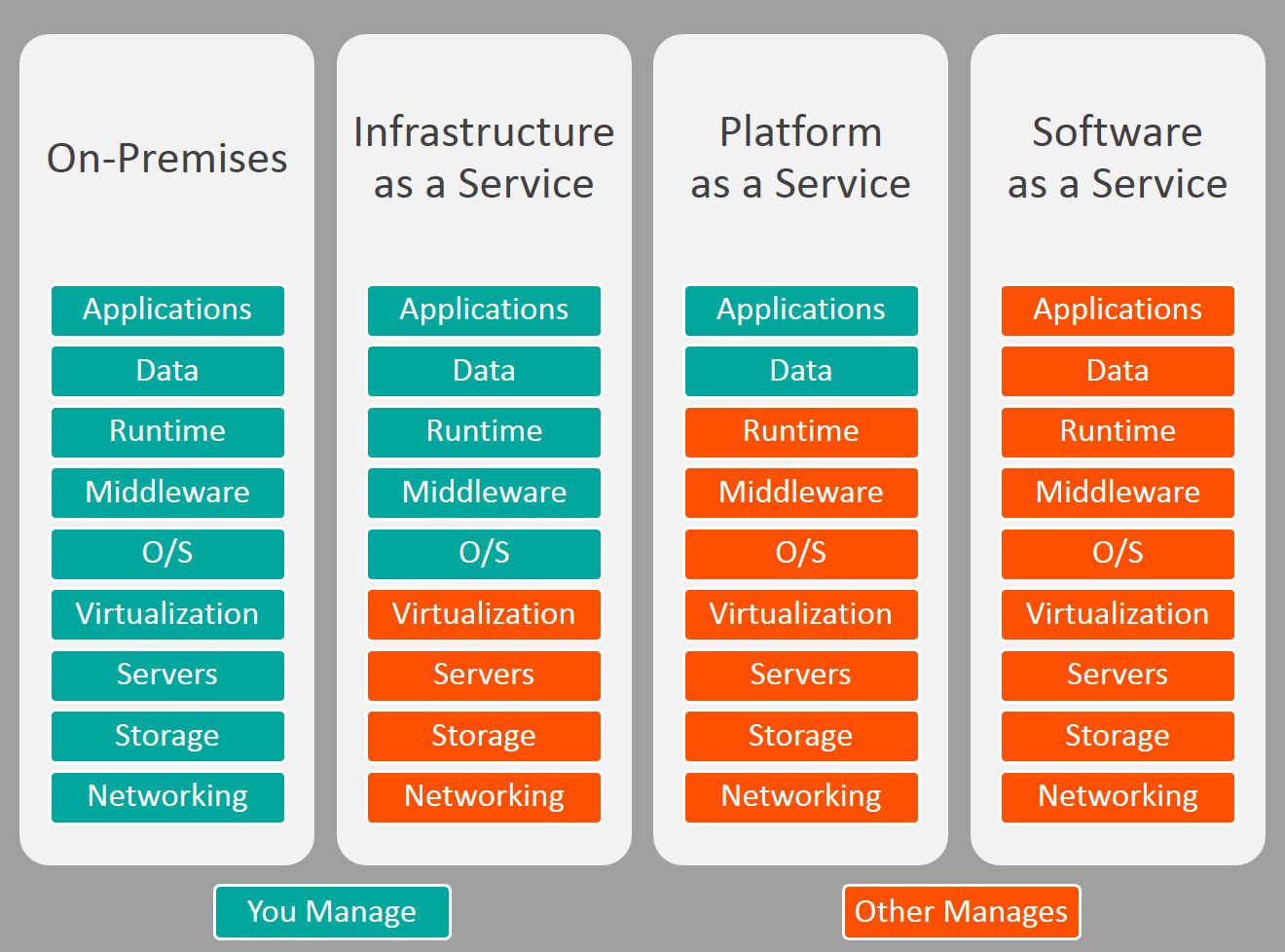
For most developers and small teams, IaaS is the starting point. It offers maximum flexibility while still eliminating the burden of physical hardware management. The diagram above illustrates how responsibility shifts between you and the provider across each service model.
Public, Private, and Hybrid Clouds
A public cloud is operated by a third-party provider and shared across multiple customers. Resources are isolated logically but run on shared physical hardware. This model offers the best price-to-performance ratio and is suitable for the vast majority of workloads.
A private cloud is dedicated infrastructure operated solely for one organisation, either on-premises or hosted by a provider. It offers greater control and compliance capabilities but at significantly higher cost.
A hybrid cloud combines both, allowing workloads to move between environments based on cost, performance, or compliance requirements. Many enterprises adopt this model as they migrate legacy systems to the cloud incrementally.
Why Cloud Computing Matters in 2025
The pace of cloud adoption continues to accelerate. Organisations that embrace cloud infrastructure benefit from faster time-to-market, built-in redundancy, and access to managed services that would be prohibitively expensive to build in-house. From AI inference workloads to real-time analytics, the cloud has become the default platform for modern software.
At LightYear, we believe cloud infrastructure should be accessible to everyone — not just enterprises with dedicated DevOps teams. Our platform is designed to make deploying and managing cloud servers as straightforward as possible, so you can focus on building great products.
Ready to experience reliable cloud hosting?
Deploy your first server in under 60 seconds. No contracts, pay only for what you use.
Get Started Free